
Whiskey, bourbon and Scotch sit side by side on every liquor store shelf, and the labels can be confusing. Is bourbon a type of whiskey? Why does Scotch drop the “e”? Does bourbon have to come from Kentucky? And which one should you buy for an Old Fashioned, a gift or a quiet pour after work?
The short answer: bourbon and Scotch are both types of whiskey. What separates them is where they are made, the grains they use, the barrels they age in and the rules they must follow. This guide explains every difference in plain language, with a simple comparison chart, tasting notes, cocktail ideas and tips for choosing a bottle. When you are ready to shop, Prater Liquor and Smoke Shop is a family-owned liquor store at 1447 Prater Way, Sparks, NV 89431, serving Sparks and Reno. Call (775) 622-0740 to check on a specific bottle before you visit.
- WhiskeyAny spirit distilled from fermented grain and usually aged in wood
- BourbonAmerican whiskey, at least 51% corn, aged in new charred oak
- ScotchWhisky made in Scotland and aged at least 3 years in oak
- RememberAll bourbon and Scotch are whiskey, but not all whiskey is bourbon or Scotch
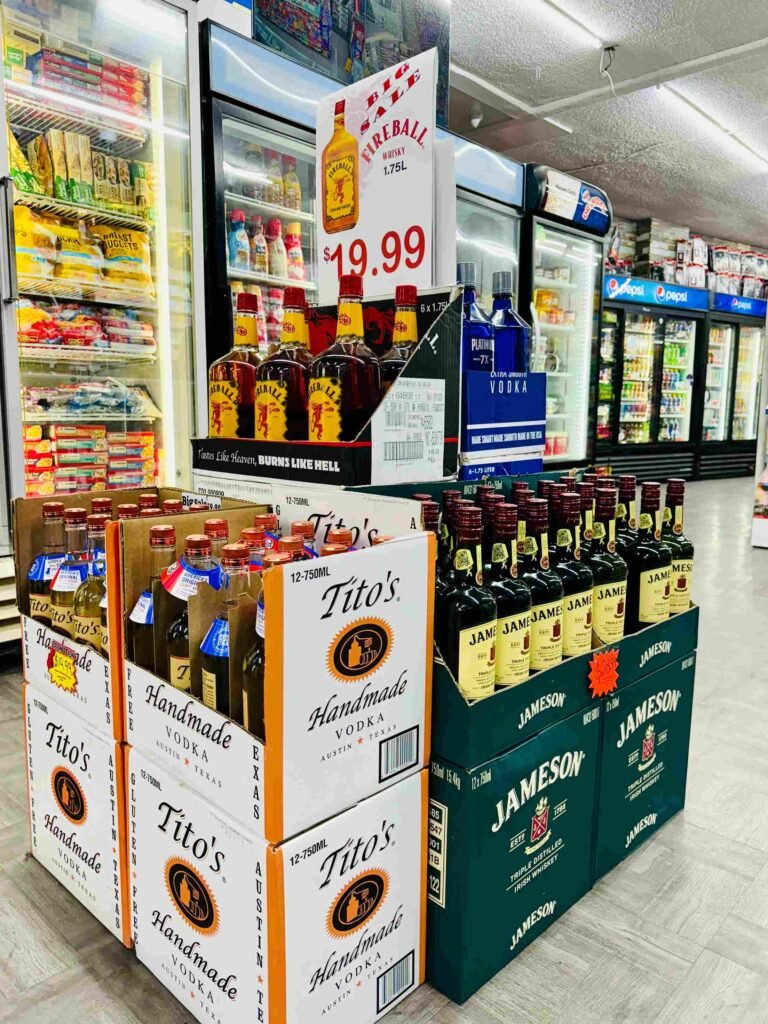
The Quick Answer
Think of whiskey as the family name and bourbon and Scotch as two members of the family. Whiskey is the broad category: a spirit made from fermented grain, distilled and usually aged in wooden barrels. Bourbon and Scotch are specific styles of whiskey with their own legal definitions.
- Whiskey can be made almost anywhere, from almost any grain, under the rules of the country where it is produced.
- Bourbon must be made in the United States from a grain mix of at least 51 percent corn, and aged in new, charred oak containers. Corn gives it a sweeter, rounder flavor with vanilla and caramel notes.
- Scotch must be made in Scotland, mostly from malted barley and other cereals, and aged at least three years in oak casks in Scotland. Flavors range from light and fruity to rich and smoky.
A simple rule to remember: all bourbon is whiskey, and all Scotch is whisky, but most whiskey is neither bourbon nor Scotch.
Bourbon vs Whiskey: The Key Difference
When people compare bourbon vs whiskey, they are really comparing one style with the whole category. A whiskey becomes bourbon only when it is made in the United States from at least 51 percent corn, aged in new charred oak and made without added color or flavor. A whiskey that misses any of those rules, such as one aged in used barrels or made mostly from barley, can still be an excellent whiskey, but it cannot be sold as bourbon.
Scotch vs Whiskey: The Key Difference
The same idea applies to Scotch vs whiskey. Scotch is whisky made in Scotland and aged there for at least three years in oak casks, with most single malts made entirely from malted barley. An Irish, Canadian, Japanese or American whisky made in a similar way still cannot be called Scotch, because the name is legally protected and tied to the country of origin.
Bourbon vs Scotch: The Key Difference
Comparing bourbon vs Scotch means comparing two specific styles from two countries. Bourbon is American, corn-based, aged in new charred barrels and usually sweeter. Scotch is Scottish, barley-based, aged at least three years in mostly used casks, and ranges from light and fruity to smoky.
Whiskey vs Bourbon vs Scotch: Comparison Chart
| Whiskey (general) | Bourbon | Scotch | |
|---|---|---|---|
| Where it is made | Anywhere in the world | United States only | Scotland only |
| Spelling | Whiskey or whisky, depending on country | Whiskey (usually) | Whisky |
| Main grain | Any grain: corn, barley, rye, wheat | At least 51% corn | Malted barley, plus other cereals for grain whisky |
| Barrels | Depends on local rules | New, charred oak containers | Oak casks, often previously used (ex-bourbon, sherry and others) |
| Minimum aging | Depends on local rules | No minimum for “bourbon”; 2 years for “straight bourbon” | 3 years |
| Additives | Depends on local rules | No coloring or flavoring allowed | Plain caramel coloring allowed; no flavoring |
| Minimum bottling strength | Usually 40% ABV (80 proof) | 40% ABV (80 proof) | 40% ABV (80 proof) |
| Typical flavor | Wide range | Sweet: vanilla, caramel, toasted oak | Wide range: honey and fruit to peat smoke |
What Is Whiskey?
Whiskey is a distilled spirit made from a fermented mash of cereal grains. Producers cook grains such as corn, barley, rye or wheat with water to release their starches, convert those starches into sugars, ferment the sugary liquid with yeast to make a kind of beer, and then distill it to concentrate the alcohol and flavor. Most whiskey is then aged in wooden barrels, which gives it color and much of its flavor.
Each country that makes whiskey has its own rules. That is why there are so many styles, including bourbon, rye, Tennessee whiskey, Scotch, Irish whiskey, Canadian whisky and Japanese whisky. They share the same basic process but differ in grains, stills, barrels, aging requirements and climate.
Whiskey or Whisky?
Both spellings are correct. As a general rule, whisky (no “e”) is used in Scotland, Canada and Japan, while whiskey (with an “e”) is common in Ireland and the United States. There are exceptions. A few American brands, such as Maker’s Mark and Old Forester, spell it “whisky” on the label. The spelling tells you something about tradition, not quality.
How Whiskey Is Made, Step by Step
- Milling: grains are ground to expose their starches.
- Mashing: ground grain is cooked with water. Enzymes, often from malted barley, turn starches into fermentable sugars.
- Fermentation: yeast converts the sugars into alcohol over several days, creating a low-alcohol liquid often called distiller’s beer or wash.
- Distillation: the wash is heated in a pot still or column still. Alcohol evaporates before water, so the distiller collects a stronger spirit.
- Aging: the clear spirit, sometimes called new make or white dog, goes into wooden barrels. Over months and years it takes on color and flavor from the wood.
- Bottling: the whiskey is usually diluted with water to bottling strength, sometimes filtered, and bottled. Barrel-proof or cask-strength whiskies are bottled with little or no added water.
Where the Flavor Comes From
A whiskey’s flavor comes from four main places. The grain sets the base: corn is sweet, rye is spicy, wheat is soft and malted barley is bready and nutty. Fermentation and distillation create fruity and floral notes. The barrel adds vanilla, caramel, spice and tannin. And time and climate decide how strongly the barrel shapes the spirit. Many tasters estimate that the barrel provides most of an aged whiskey’s flavor and all of its natural color.
What Is Bourbon?
Bourbon is America’s best-known native spirit. In 1964, Congress recognized bourbon as a distinctive product of the United States. To be called bourbon, a whiskey must meet a specific set of federal rules.
The Rules of Bourbon
- Made in the United States.
- Made from a grain mixture, called the mash bill, of at least 51 percent corn.
- Distilled to no more than 160 proof (80 percent alcohol).
- Aged in new, charred oak containers.
- Entered into the barrel at no more than 125 proof.
- Bottled at at least 80 proof (40 percent alcohol).
- No added coloring or flavoring. Only water may be added to reduce proof.
Does Bourbon Have to Come From Kentucky?
No. This is one of the most common myths. Bourbon can be made anywhere in the United States, and there are bourbon distilleries in many states, including Nevada’s neighbors. That said, Kentucky makes the large majority of the world’s bourbon, thanks to its limestone-filtered water, hot summers and cold winters, and more than two centuries of tradition.
How Old Does Bourbon Have to Be?
Technically, there is no minimum aging period for a whiskey labeled simply “bourbon”. In practice, nearly every bourbon on the shelf is aged for years. A bourbon labeled straight bourbon must be aged at least two years, and if it is younger than four years, the label must state its age. A bottled-in-bond bourbon must come from one distillery and one distilling season, be aged at least four years in a federally bonded warehouse, and be bottled at exactly 100 proof.
Bourbon Mash Bills
Every bourbon starts with corn, but the other grains change its personality.
- Traditional bourbon: mostly corn, with some rye and malted barley. Sweet with a gentle spice. Examples include Jim Beam and Buffalo Trace.
- High-rye bourbon: a larger share of rye for more pepper, cinnamon and baking spice. Examples include Four Roses and Bulleit.
- Wheated bourbon: wheat replaces rye as the second grain, for a softer, rounder and sweeter sip. Examples include Maker’s Mark and Larceny.
Why New Charred Oak Matters
Because bourbon must use new barrels, every batch gets the full flavor of fresh oak. Charring the inside of the barrel caramelizes the wood sugars, creating a layer that gives bourbon its signature vanilla, caramel, toffee and toasted notes, along with its deep amber color. Once used, these barrels cannot be reused for bourbon, so many are sold to Scotch, Irish, rum and tequila producers around the world.
Want specific bottles to try? Our guide to the best bourbons under $50 covers well-known, widely available picks for sipping and mixing.
What Is Scotch Whisky?
Scotch whisky is whisky made in Scotland under the Scotch Whisky Regulations. Scotland has been making whisky for centuries, and today Scotch is sold in well over 100 countries.
The Rules of Scotch
- Distilled and matured in Scotland.
- Made from water and malted barley, to which other whole grains of other cereals may be added.
- Distilled to less than 94.8 percent alcohol, so it keeps the flavor of its raw materials.
- Aged in oak casks for at least three years in Scotland.
- Bottled at at least 40 percent alcohol (80 proof).
- No added substances other than water and plain caramel coloring.
The Five Categories of Scotch
Single Malt
Made from 100% malted barley at a single distillery, in pot stills. Examples include Glenfiddich, The Glenlivet and The Macallan.
Single Grain
Made at a single distillery, often from wheat or corn with some malted barley, usually in column stills. Lighter in style.
Blended Scotch
A blend of malt and grain whiskies from several distilleries. The most popular category. Examples include Johnnie Walker, Dewar’s and Chivas Regal.
Blended Malt
A blend of single malts from more than one distillery, with no grain whisky. Monkey Shoulder is a well-known example.
Blended Grain
A blend of single grain whiskies from more than one distillery. Less common on store shelves.
Scotch Whisky Regions
Scotland has five protected whisky regions. Region gives you a rough idea of style, although every distillery has its own character.
- Speyside: the most distilleries of any region. Often fruity, honeyed and elegant, sometimes rich with sherry cask influence.
- Highlands: the largest region, with a huge range of styles, from light and floral to rich and lightly smoky. The Islands, such as Skye and Orkney, are often grouped here.
- Islay: a small island famous for heavily peated, smoky, maritime whiskies such as Laphroaig, Lagavulin and Ardbeg.
- Lowlands: often light, grassy and gentle. A good starting point for new Scotch drinkers.
- Campbeltown: once a whisky capital with dozens of distilleries, now a handful. Known for a slightly salty, oily and complex style.
What Is Peat?
Peat is partly decayed plant material dug from bogs. In parts of Scotland, peat fires were traditionally used to dry malted barley. The smoke soaks into the grain and carries through to the finished whisky, giving it flavors of campfire, iodine, smoked meat or medicine. Not all Scotch is smoky. Many single malts and most blends use little or no peat. If you like smoke, look to Islay. If you do not, start with Speyside or the Lowlands.
Why Scotch Uses Used Barrels
Unlike bourbon, Scotch can be aged in previously used casks, and most of it is. Ex-bourbon barrels are the most common, adding vanilla and gentle sweetness. Ex-sherry casks add dried fruit, nuts and spice. Producers also finish whiskies in casks that once held port, wine, rum and other drinks. Scotland’s cool, damp climate means whisky matures more slowly than bourbon does in Kentucky’s hot summers, which is one reason Scotch age statements are often higher.
How Whiskey, Bourbon and Scotch Taste
Flavor is where the differences become obvious. Here is what to expect from each style, in general terms.
| Style | Common flavors | Mouthfeel | Good for |
|---|---|---|---|
| Bourbon | Vanilla, caramel, brown sugar, cinnamon, toasted oak, cherry | Round, sweet, warming | Sipping, Old Fashioneds, whiskey sours |
| Rye whiskey | Black pepper, baking spice, mint, dill, dried fruit | Drier, spicy | Manhattans, Sazeracs |
| Tennessee whiskey | Banana, caramel, light smoke, vanilla | Smooth, mellow | Mixed drinks, whiskey and cola |
| Speyside Scotch | Honey, apple, pear, malt, dried fruit | Elegant, smooth | Sipping neat or with water |
| Islay Scotch | Peat smoke, sea salt, iodine, citrus | Bold, oily | Sipping, smoky cocktails |
| Blended Scotch | Honey, malt, light smoke, cereal | Light to medium | Highballs, Rob Roys, everyday sipping |
| Irish whiskey | Green apple, vanilla, honey, cream | Light, smooth | Irish coffee, easy sipping |
| Japanese whisky | Floral, honey, citrus, delicate oak | Light, balanced | Highballs |
Bourbon vs Scotch in One Sentence
Bourbon tends to be sweeter and bolder because of its corn and new charred oak, while Scotch tends to be drier and more varied, ranging from fruity and honeyed to intensely smoky, because of malted barley, used casks and long, cool aging.
Other Types of Whiskey You Will See on the Shelf
Rye Whiskey
American rye whiskey follows the same rules as bourbon, except the mash must be at least 51 percent rye instead of corn. Rye is spicier and drier, with notes of black pepper and baking spice. It was the original whiskey of early America and is the classic base for a Manhattan and a Sazerac. Popular examples include Bulleit Rye, Rittenhouse and Sazerac Rye.
Tennessee Whiskey
Tennessee whiskey is made in Tennessee and meets the same basic requirements as bourbon. Most producers also use the Lincoln County Process, filtering the new spirit through sugar maple charcoal before aging, which many drinkers find makes it smoother. Jack Daniel’s and George Dickel are the best-known brands. Some people call Tennessee whiskey a type of bourbon, while Tennessee producers prefer their own name.
Irish Whiskey
Irish whiskey is made on the island of Ireland and aged at least three years in wooden casks. Many Irish whiskeys are triple distilled, which tends to create a light, smooth spirit. Ireland also has a unique style called single pot still whiskey, made from a mix of malted and unmalted barley. Jameson, Bushmills and Redbreast are well-known names.
Canadian Whisky
Canadian whisky must be made and aged in Canada for at least three years in small wood. It is often blended, frequently uses rye in the recipe, and is known for being light and easy to mix. Crown Royal and Canadian Club are two of the most popular brands.
Japanese Whisky
Japan began making whisky in the 1920s, inspired by Scotch, and its whiskies now win international awards. Industry standards introduced in 2021 define Japanese whisky as fermented, distilled, aged at least three years and bottled in Japan. Japanese whiskies are often delicate and balanced, and the whisky highball is a national favorite. Suntory and Nikka are the largest producers.
American Single Malt and Craft Whiskey
A growing number of American distilleries make single malt whiskey from 100 percent malted barley, and the U.S. recently adopted a formal definition for American single malt. Craft distilleries across the West, including in Nevada, are also experimenting with local grains, unusual barrels and new styles.
How to Read a Whiskey Label
Whiskey labels are packed with terms. Here is what the most common ones mean.
- Straight: an American whiskey aged at least two years in new charred oak, with no coloring or flavoring added.
- Bottled in bond: from one distillery and one season, aged at least four years, bottled at 100 proof.
- Small batch: a blend of a limited number of barrels. There is no legal definition, so batch sizes vary widely.
- Single barrel: whiskey from one individual barrel. Each barrel tastes a little different.
- Cask strength or barrel proof: bottled at or near the strength it came out of the barrel, often well over 100 proof. Add a little water.
- Age statement: on Scotch and most whiskeys, the number refers to the youngest whisky in the bottle.
- NAS (no age statement): the bottle does not list an age. This is common and not necessarily a sign of lower quality.
- Proof: in the United States, proof is double the alcohol percentage. 80 proof equals 40 percent alcohol by volume.
- Finished: whiskey that spent extra time in a second type of cask, such as sherry, port or wine, for added flavor.
- Peated: made with barley dried over peat smoke. Expect smoky flavor.
- Non-chill filtered: not filtered at cold temperatures, which some feel keeps more flavor and texture. It can turn slightly cloudy with ice.
What Age Really Means
Older does not always mean better. A 12-year-old Scotch and a 12-year-old bourbon taste very different because bourbon ages faster in new charred oak and a hot climate. Many excellent bourbons are four to eight years old, while many excellent Scotches are 10 to 18 years old. Age raises the price because of the years of storage and the whisky lost to evaporation, known as the angel’s share. Choose what tastes good to you, not just the biggest number.
Which Should You Buy? A Simple Guide
You like sweet flavors
Start with bourbon. Its vanilla and caramel notes are approachable and easy to enjoy neat or on the rocks.
You like spice
Try a high-rye bourbon or a straight rye whiskey. Both bring pepper and baking spice.
You like smooth and light
Try Irish whiskey, Canadian whisky or a Lowland or Speyside Scotch.
You like smoke
Look for a peated Islay Scotch, or a blend that includes Islay whisky.
You are mixing cocktails
A versatile bourbon or rye for Old Fashioneds and sours, a blended Scotch for highballs.
You are buying a gift
A well-known single malt Scotch, a premium bourbon or a gift-boxed bottle. Ask us for suggestions.
Good Starting Points for Beginners
If you are new to brown spirits, these widely available styles are easy places to start. Selection at our store changes, so call ahead if you want a specific bottle.
- Wheated bourbon, such as Maker’s Mark: soft, sweet and gentle.
- Classic Kentucky bourbon, such as Buffalo Trace or Wild Turkey 101: more depth and spice.
- Irish whiskey, such as Jameson: light and smooth, great with ginger ale.
- Blended Scotch, such as Johnnie Walker Black Label: honey, malt and light smoke.
- Speyside single malt, such as The Glenlivet 12 or Glenfiddich 12: fruity and approachable.
- Blended malt Scotch, such as Monkey Shoulder: smooth and made for mixing.
- Islay single malt, such as Laphroaig 10: for when you are ready to try serious smoke.
Bourbon or Scotch on a Budget
Bourbon generally offers more flavor per dollar at the lower end of the market, partly because it ages faster and the U.S. has a huge supply. Scotch costs more on average because of longer aging, import costs and taxes. Blended Scotch is the most affordable way into Scotch, while single malts and older age statements cost more. For both, the best value is often in the middle of the shelf, not the cheapest or the most expensive bottle.
Classic Whiskey Cocktails to Make at Home
Old Fashioned (Bourbon or Rye)
- 2 oz bourbon or rye
- 1/4 oz simple syrup or 1 sugar cube
- 2 dashes aromatic bitters
- Orange peel
Stir the whiskey, syrup and bitters with ice for about 20 seconds. Strain over a large ice cube and express an orange peel over the top.
Whiskey Sour (Bourbon)
- 2 oz bourbon
- 3/4 oz fresh lemon juice
- 3/4 oz simple syrup
- Optional: 1 egg white
Shake hard with ice, then strain over fresh ice. If using egg white, shake without ice first, then again with ice, for a silky foam.
Manhattan (Rye or Bourbon)
- 2 oz rye whiskey
- 1 oz sweet vermouth
- 2 dashes aromatic bitters
- Cherry for garnish
Stir with ice until very cold and strain into a chilled coupe. Garnish with a cherry.
Rob Roy (Scotch)
A Manhattan made with blended Scotch: 2 oz blended Scotch, 1 oz sweet vermouth and 2 dashes of bitters, stirred and strained. A great way to try Scotch in a cocktail.
Penicillin (Scotch)
- 2 oz blended Scotch
- 3/4 oz fresh lemon juice
- 3/4 oz honey-ginger syrup
- 1/4 oz peated Islay Scotch, floated on top
Shake the blended Scotch, lemon and syrup with ice, strain over fresh ice and gently float the Islay Scotch on top for a smoky aroma.
Scotch or Japanese Highball
Fill a tall glass with ice, add 1 1/2 oz whisky and top with about 4 oz of cold soda water. Stir once gently and garnish with a lemon twist. Light, refreshing and perfect for warm Sparks evenings.
Mint Julep (Bourbon)
Gently muddle 8 to 10 mint leaves with 1/2 oz simple syrup, add 2 1/2 oz bourbon, fill with crushed ice and stir until the cup frosts. Top with more crushed ice and a mint sprig. The traditional drink of the Kentucky Derby.
Irish Coffee
Warm a mug, add 1 1/2 oz Irish whiskey, 1/2 oz brown sugar syrup and 4 oz hot coffee, then float lightly whipped cream on top. Do not stir; drink the coffee through the cream.
Hot Toddy
Combine 1 1/2 oz whiskey, 1/2 oz honey and 1/2 oz lemon juice in a mug, top with 4 oz hot water and garnish with a lemon wheel and cinnamon stick. Popular during cold Northern Nevada winters.
Hosting a crowd? Our guide on how much liquor to buy for a party helps you plan whiskey, beer, wine and mixers by guest count. If tequila is on the menu too, see our best tequilas for margaritas.
How to Drink Whiskey
Neat
Whiskey poured into a glass at room temperature, with nothing added. The best way to taste everything a whiskey offers. A tulip-shaped glass, such as a Glencairn, concentrates the aroma; a rocks glass works fine too.
With a Few Drops of Water
Adding a few drops of water can open up a whiskey, softening the alcohol and releasing new aromas. This is especially helpful with cask-strength bottles. Add a little at a time with a straw or dropper and taste as you go.
On the Rocks
Ice chills and dilutes the whiskey, making it smoother and more refreshing but muting some flavors. A single large cube or sphere melts slowly. Great for bourbon on a hot afternoon.
In a Highball
Whiskey topped with soda water, ginger ale or cola over ice. Easy, refreshing and a good way to enjoy everyday bottles.
How to Taste Like a Pro
- Look: note the color. Darker often means more barrel influence, though Scotch may contain caramel coloring.
- Smell: hold the glass slightly below your nose with your mouth open. Do not inhale too hard, as the alcohol can overwhelm you.
- Sip: take a small sip and let it coat your tongue. Notice sweetness, spice, fruit, smoke and oak.
- Finish: notice how long the flavor lasts after you swallow, and how it changes.
- Compare: taste two styles side by side, such as a bourbon and a Speyside Scotch. The differences become clear quickly.
Hosting a Whiskey Tasting at Home
A tasting is a fun way to explore the differences between whiskey, bourbon and Scotch with friends. Choose three to five bottles that contrast with each other, such as a wheated bourbon, a high-rye bourbon, a rye whiskey, a Speyside single malt and an Islay single malt. Pour small samples, about half an ounce each, taste from lightest to boldest, and save smoky whiskies for last because peat lingers on the palate.
- Set out water, plain crackers or bread to reset your palate.
- Give each guest a sheet to note aroma, flavor and favorites.
- Taste the same bottles neat and then with a few drops of water.
- Offer food, plan safe rides home and keep pours small.
Well-Known Examples of Each Style
These widely distributed brands show what each style tastes like. They are examples to help you learn the categories, not a list of what is on our shelf today.
| Style | Well-known examples | What to expect |
|---|---|---|
| Traditional bourbon | Jim Beam, Buffalo Trace, Evan Williams, Wild Turkey | Classic vanilla, caramel and oak |
| Wheated bourbon | Maker’s Mark, Larceny, W.L. Weller | Soft, sweet and round |
| High-rye bourbon | Four Roses, Bulleit, Old Grand-Dad | Spicier, drier finish |
| Rye whiskey | Bulleit Rye, Rittenhouse, Sazerac Rye, Old Overholt | Pepper, baking spice, herbs |
| Tennessee whiskey | Jack Daniel’s, George Dickel | Mellow, banana, light char |
| Blended Scotch | Johnnie Walker, Dewar’s, Chivas Regal | Honey, malt, light smoke |
| Speyside single malt | Glenfiddich, The Glenlivet, The Macallan | Fruit, honey, sometimes sherry |
| Islay single malt | Laphroaig, Lagavulin, Ardbeg | Heavy peat smoke and sea salt |
| Irish whiskey | Jameson, Bushmills, Redbreast | Light, smooth, creamy |
| Canadian whisky | Crown Royal, Canadian Club | Light, smooth, easy to mix |
| Japanese whisky | Suntory Toki, Nikka | Delicate, balanced, floral |
Whiskey Gift Guide
Whiskey is one of the most popular gifts for birthdays, holidays, retirements and thank-yous. A few tips help you pick well, even if you do not drink whiskey yourself.
- Find out what they already drink. If they love bourbon, a step-up bourbon is a safe bet. If they drink Scotch, consider a single malt from a region they enjoy.
- Ask about smoke. Smoky Islay whisky is loved by some people and disliked by others. When in doubt, choose an unpeated style.
- Choose a recognizable name for new drinkers and something more unusual for collectors, such as a single barrel, bottled-in-bond or cask-finished bottle.
- Add something extra. A pair of rocks glasses, a large ice mold, bitters or a cigar for cigar lovers make the gift feel complete.
- Set a budget first, then ask us for options at that price. Good gifts are available at many price points.
Pairing whiskey with a cigar? Our smoke shop in Sparks carries cigars and smoking accessories such as cutters and torch lighters.
Questions to Ask When You Shop
You do not need to know whiskey terms to find a great bottle. Telling the person at the counter a few simple things helps them point you in the right direction.
- Do you plan to sip it neat, drink it on the rocks or mix cocktails?
- Do you prefer sweet, spicy, fruity or smoky flavors?
- What whiskeys, if any, have you enjoyed before?
- Is it for yourself or a gift, and what is your budget?
- Do you want a bottle you can find again easily, or something special and limited?
Whiskey at Altitude: A Note for Northern Nevada
Sparks and Reno sit at around 4,400 to 4,500 feet above sea level, and the air here is very dry. Many visitors from lower elevations find they feel the effects of alcohol and dehydration more than they expect, especially at outdoor summer events, on Tahoe trips and after time in the sun. Drink plenty of water, eat before and while you drink, keep pours modest and plan a safe ride home. Highballs and drinks served long over ice are a sensible choice on hot days.
Bourbon vs Scotch: Which Is Better?
Neither is better. They are different, and the right choice depends on your taste and what you are using it for. Bourbon is often the easier introduction because of its sweetness and bold flavor, and it is the natural choice for American classics like the Old Fashioned and the whiskey sour. Scotch offers enormous variety, from delicate Lowland whiskies to smoky Islay malts, and rewards slow sipping and exploration. Many whiskey fans keep at least one of each on hand.
If you cannot decide, buy two smaller or more affordable bottles, one bourbon and one Speyside Scotch, and taste them side by side. You will quickly learn which you prefer, and you might find that you enjoy both for different moods and occasions.
Food Pairings
- Bourbon: barbecue, smoked brisket, ribs, pecan pie, dark chocolate and anything with caramel.
- Rye: charcuterie, aged cheddar, spiced nuts and rich stews.
- Speyside Scotch: fruit tarts, mild cheeses, roast chicken and shortbread.
- Islay Scotch: smoked salmon, oysters, blue cheese and grilled meats.
- Irish whiskey: breakfast dishes, corned beef, soda bread and creamy desserts.
- Japanese whisky: sushi, grilled yakitori and light snacks, especially in a highball.
A Short History of Whiskey, Bourbon and Scotch
Distilling knowledge spread into Ireland and Scotland during the Middle Ages, and the earliest surviving written record of Scotch whisky production dates to 1494, when Scottish tax records mention malt being sent to a friar to make “aqua vitae”. The word whisky comes from the Gaelic uisce beatha or uisge beatha, meaning water of life.
Scottish and Irish immigrants brought distilling to North America. In the late 1700s, settlers in Kentucky and the surrounding region began making whiskey from the corn that grew so well there. By the 1800s, the style that became known as bourbon had taken shape, possibly named after Bourbon County, Kentucky, or Bourbon Street in New Orleans, where much of it was sold. Historians still debate the origin of the name.
The Bottled-in-Bond Act of 1897 created one of the first U.S. consumer protection laws for spirits, guaranteeing that bonded whiskey was genuine and properly aged. Prohibition from 1920 to 1933 closed most American distilleries, and the industry took decades to recover. Today, whiskey is enjoying a worldwide boom, with new distilleries opening across the United States, Scotland, Ireland, Japan and beyond.
Common Myths About Whiskey
- “Bourbon must be made in Kentucky.” False. It must be made in the United States.
- “Older whiskey is always better.” Not necessarily. Too much time in a barrel can make whiskey taste woody and bitter.
- “All Scotch is smoky.” False. Many Scotches have little or no peat smoke.
- “Adding water or ice ruins whiskey.” False. Drink it the way you enjoy it. A little water often improves it.
- “Darker whiskey is older.” Not always. Barrel type, climate and, for Scotch, caramel coloring all affect color.
- “Single malt means one barrel.” False. Single malt means one distillery and 100 percent malted barley. It can blend many barrels.
- “Expensive means better for you.” Price reflects age, rarity and branding. Find what you enjoy at a price you are comfortable with.
How to Store Whiskey
- Store bottles upright, unlike wine. High-proof spirit can damage corks over time.
- Keep them in a cool, dark place away from sunlight and heat. Sunlight can fade color and flavor.
- Whiskey does not age in the bottle. A 12-year-old Scotch stays 12 years old.
- An opened bottle keeps well for a long time, but once it is less than about a third full, the flavor can slowly fade as air fills the bottle. Finish it within a year or so for best taste.
- Northern Nevada’s dry air does not harm sealed bottles, but keep them out of hot garages and cars in summer.
Whiskey Glossary
- ABV: alcohol by volume.
- Angel’s share: whiskey lost to evaporation during aging.
- Cask: a wooden barrel used for aging.
- Char: the burnt inner layer of a barrel. Bourbon barrels are charred.
- Dram: a small pour of whisky, especially Scotch.
- Finish: the flavor that remains after swallowing, or extra aging in a second cask.
- Malt: grain, usually barley, that has been soaked, sprouted and dried.
- Mash bill: the recipe of grains used to make a whiskey.
- Neat: served at room temperature with nothing added.
- Peat: partly decayed plant matter burned to dry malt, adding smoky flavor.
- Pot still / column still: two main types of still. Pot stills make richer spirit; column stills make lighter spirit efficiently.
- Proof: in the U.S., twice the ABV.
- Sour mash: a process that adds some spent mash from a previous batch to a new one, for consistency. Used by most bourbon distilleries.
Enjoy Responsibly
Whiskey is usually 40 percent alcohol or more, and cask-strength bottles can be much stronger. A standard drink of 80-proof whiskey is about 1.5 ounces. Pace yourself, eat while you drink, drink water between pours, and never drink and drive. All alcohol sales at our store are for adults 21 and older with a valid photo ID.
Buying Whiskey, Bourbon and Scotch in Sparks and Reno
Prater Liquor and Smoke Shop is a family-owned store on Prater Way, convenient to Downtown Sparks, Victorian Square, Spanish Springs, the McCarran Boulevard corridor and Reno. We carry whiskey alongside our wider range of beer, wine and spirits in Sparks, plus mixers, snacks, ice and cold drinks. See our liquor store page for more on what we stock.
Our selection changes as new bottles arrive and popular ones sell out, so call (775) 622-0740 to check price and availability before you visit. Tell us what you like, your budget and whether you are sipping, mixing or gifting, and we will suggest a few options. The same store is also our smoke shop in Sparks, with cigars, smoking accessories and a vape shop for Reno and Sparks customers.
Pick up a bottle nearby: our liquor store near me in Sparks page shows what we carry and how to find us.
Decided on bourbon? Read our guide to buying bourbon in Sparks for bourbon styles, proof, age statements and tips for choosing a bottle.
Ready to pick a bottle? Visit our whiskey store in Sparks, NV.
Frequently Asked Questions
What is the difference between whiskey, bourbon and Scotch?
Whiskey is the broad category of spirits distilled from fermented grain. Bourbon is American whiskey made from at least 51% corn and aged in new charred oak. Scotch is whisky made in Scotland, mostly from malted barley, and aged at least three years in oak casks.
Is bourbon a whiskey?
Yes. Bourbon is a type of whiskey. All bourbon is whiskey, but not all whiskey is bourbon.
Is Scotch a whiskey?
Yes. Scotch is whisky made in Scotland under Scottish rules. It is usually spelled whisky, without the e.
Which is sweeter, bourbon or Scotch?
Bourbon is usually sweeter because of its corn-heavy recipe and new charred oak barrels, which add vanilla and caramel. Scotch tends to be drier, with flavors ranging from fruit and honey to smoke.
Does bourbon have to be made in Kentucky?
No. Bourbon must be made in the United States. Most bourbon comes from Kentucky, but it can legally be made in any state.
Why is Scotch spelled whisky?
Scotland, Canada and Japan generally use whisky, while Ireland and the United States generally use whiskey. The spelling reflects tradition, not quality.
Why are some Scotches smoky?
Some distilleries dry their malted barley over peat fires. The smoke carries into the whisky. Islay whiskies are known for heavy peat smoke, while many other Scotches have little or none.
Is Jack Daniel’s a bourbon?
Jack Daniel’s is a Tennessee whiskey. It meets the basic requirements of bourbon but is filtered through maple charcoal and is labeled as Tennessee whiskey.
What is the difference between bourbon and rye?
Bourbon must be at least 51% corn, which makes it sweeter. Rye whiskey must be at least 51% rye, which makes it spicier and drier. Both follow similar aging rules in the United States.
What is a single malt Scotch?
Single malt Scotch is made from 100% malted barley at a single distillery in pot stills. It can be a blend of many barrels from that one distillery.
Which whiskey is best for beginners?
Many beginners enjoy a wheated bourbon, an Irish whiskey or a Speyside single malt, because they are smooth and approachable. Try a little water or ice to soften the alcohol.
Which whiskey is best for an Old Fashioned?
Bourbon or rye. Bourbon makes a sweeter, rounder Old Fashioned, while rye makes it spicier.
How long does whiskey last after opening?
A sealed bottle lasts indefinitely when stored upright and away from light. Once opened, it keeps well for a long time, but flavor slowly fades when the bottle is mostly empty.
Where can I buy whiskey in Sparks, NV?
Prater Liquor and Smoke Shop at 1447 Prater Way, Sparks, NV 89431 carries whiskey, bourbon and Scotch. Call (775) 622-0740 to check current selection and prices.
Do I need ID to buy whiskey?
Yes. You must be 21 or older with a valid, unexpired government-issued photo ID.
Find Your Next Bottle in Sparks
Bourbon, Scotch, rye, Irish or Japanese, we will help you choose a bottle that fits your taste and budget. Call ahead to check a bottle, then visit Prater Liquor and Smoke Shop at 1447 Prater Way, Sparks, NV 89431, a short drive from Reno. Adults 21+ only. Please enjoy responsibly.
