
Kratom has become a common sight on smoke shop shelves across Nevada, from Las Vegas to Reno and Sparks. It has also become one of the most debated products in the state. Lawmakers, regulators, health officials and customers all have strong opinions, and the rules have been changing quickly, both in Nevada and at the federal level.
This guide explains what kratom is, what Nevada law currently says, what is changing, what the risks are and how to choose products more carefully if you are an adult who decides to buy it. Prater Liquor and Smoke Shop carries kratom powder and capsules for adults at our store at 1447 Prater Way, Sparks, NV 89431, and we want our customers to buy with the full picture. Questions? Call (775) 622-0740.
Legal status as of November 2026: kratom is legal to sell to adults in Nevada under state consumer-protection rules, but the Nevada State Board of Pharmacy has proposed adding mitragynine and 7-hydroxymitragynine to Schedule I. If that proposal takes effect, kratom sales in Nevada could become illegal. Laws change quickly. Always check current rules before you buy or travel.
- Nevada statusLegal and regulated for adults (November 2026)
- Minimum ageNevada law prohibits sales to anyone under 18
- Pending changeBoard of Pharmacy proposal to schedule kratom alkaloids
- At our storeKratom powder and capsules for adults
What Is Kratom?
Kratom is the common name for Mitragyna speciosa, a tropical evergreen tree in the coffee family (Rubiaceae) that grows naturally in Southeast Asia, including Thailand, Malaysia and Indonesia. Its leaves have been used in parts of that region for generations, traditionally chewed fresh or brewed as a tea.
In the United States, kratom is usually sold as dried, ground leaf powder, as capsules filled with that powder, or as more concentrated extracts and liquid shots. It is sold in smoke shops, convenience stores, specialty kratom shops and online.
What Is in Kratom?
Kratom leaves contain dozens of naturally occurring compounds called alkaloids. The two most discussed are:
- Mitragynine: the most abundant alkaloid in the leaf.
- 7-hydroxymitragynine (7-OH): present only in very small amounts in natural leaf, but much more potent. Some products on the market are chemically enhanced to contain far higher levels of 7-OH than natural leaf does.
This difference matters, because much of the recent regulatory action, both in Nevada and federally, has focused on concentrated 7-OH products rather than on plain leaf.
What Kratom Is Not
- It is not approved by the FDA for any medical use. The FDA has repeatedly warned consumers about kratom and has said it is not lawful to market it as a dietary supplement or food additive with health claims.
- It is not a cannabis product, and it is not sold or regulated through Nevada’s cannabis dispensaries.
- It is not a substitute for medical care. Anyone with a health condition, taking medication or trying to manage pain or substance use should talk to a doctor.
You will see many claims about kratom online, from both supporters and critics. We do not make health claims about kratom, and you should be cautious of any seller who does.
Is Kratom Legal in Nevada?
As of November 2026, yes, kratom is legal to buy and sell in Nevada for adults, subject to state consumer-protection rules. Nevada did not ban kratom. Instead, it chose to regulate it, setting rules on who it can be sold to, how it must be labeled and what it cannot contain.
That said, kratom’s legal status in Nevada is under active review. The Nevada State Board of Pharmacy has proposed a regulation that would place mitragynine and 7-hydroxymitragynine in Schedule I, the most restrictive category of controlled substances. The proposal is explained in detail below. If it takes effect, the situation in Nevada could change significantly.
| Question | Answer as of November 2026 |
|---|---|
| Is kratom legal in Nevada? | Yes, for adults, under NRS 597.998 |
| Is there a minimum age? | Yes. Sales to anyone under 18 are prohibited by state law |
| Must products be labeled? | Yes. Labels must list ingredients and directions for safe use |
| Can products be adulterated? | No. Products adulterated with harmful substances are prohibited |
| Is there a pending change? | Yes. A Board of Pharmacy proposal to schedule kratom alkaloids |
| Is kratom leaf federally illegal? | No. Natural kratom leaf has not been federally scheduled |
| Is it legal in Reno and Sparks? | It follows state law; we are not aware of a separate local ban |
Nevada’s Kratom Law Explained (NRS 597.998)
Nevada regulates kratom under Nevada Revised Statutes (NRS) 597.998, often described as the state’s version of the Kratom Consumer Protection Act. Here is what it says, in plain language.
1. No Sales to Minors
A person may not knowingly sell, or offer to sell, a kratom product to a child under the age of 18. Many retailers, including smoke shops that also sell age-restricted tobacco and vapor products, check ID for kratom purchases. Please bring a valid photo ID.
2. No Adulterated Products
It is prohibited to prepare, distribute, advertise or sell a kratom product that is adulterated with a substance that affects its quality or strength to a degree that could injure a consumer. The law includes a defense for a seller who relied in good faith on the representations of the manufacturer, processor, packer or distributor.
3. Clear Labeling
A kratom product may not be sold unless its label clearly sets out the ingredients and directions for the safe and effective use of the product. If a product has no ingredient list or no directions, that is a red flag.
4. Penalties
A violation can bring a civil penalty of up to $1,000 for each violation.
5. What Counts as a Kratom Product
The law defines kratom products broadly. It covers products containing any part of the leaf of Mitragyna speciosa where the plant contains mitragynine or 7-hydroxymitragynine, whether or not the product is labeled for human consumption. It also covers synthetic materials containing mitragynine or 7-hydroxymitragynine.
This section summarizes the statute for general information. It is not legal advice. Statutes can be amended, so check the current text of NRS 597.998 on the Nevada Legislature’s website for the latest version.
What Nevada’s Current Law Does Not Do
It is just as important to understand the gaps in NRS 597.998 as what it requires. Based on the statute’s text:
- No numeric 7-OH limit: the statute mentions 7-hydroxymitragynine in its definition of a kratom product but does not set a maximum concentration.
- No vendor registration requirement appears in the statute itself.
- No mandatory lab testing requirement appears in the statute itself, so testing depends on the manufacturer.
- No 21+ age requirement: the state minimum in the statute is 18, although individual stores may choose a higher age.
- No approval of health uses: state regulation does not mean kratom is approved, safe or effective for any condition.
Those gaps are one reason it pays to read labels carefully, look for lab reports and buy from sellers who can answer your questions.
Proposed Changes: The Nevada Board of Pharmacy and Schedule I
In April 2026, the Nevada State Board of Pharmacy held a public workshop on kratom. After hearing from scientists, health professionals, advocates and kratom users, the Board voted to move forward with adding three substances to Nevada’s list of Schedule I controlled substances:
- Mitragynine, the main alkaloid in kratom leaf
- 7-hydroxymitragynine (7-OH)
- Mitragynine pseudoindoxyl, a related compound
A proposed regulation was submitted to the Legislative Counsel Bureau later that month (LCB File No. R105-26). The draft language would also cover materials and preparations containing kratom.
What This Could Mean
Schedule I is the category for substances the state considers to have a high potential for abuse and no accepted medical use. If mitragynine is placed in Schedule I, it would effectively make the sale and possession of kratom products illegal in Nevada, including natural leaf powder and capsules, because mitragynine is the main alkaloid in the leaf.
Where the Process Stands
Permanent regulations in Nevada typically go through further public hearings and review by the Legislature’s Legislative Commission before they take effect. As of November 2026, news reports indicated that kratom remained legal in Nevada, and we were not aware of the regulation having taken effect. Because this could change at any time, we will update this page when the rules change, and we will stop selling any product that becomes illegal.
How to Follow or Comment on the Process
- Check meeting agendas and notices on the Nevada State Board of Pharmacy website.
- Search the Nevada Legislature’s register of administrative regulations for the latest version of the proposed regulation.
- Public workshops and hearings usually accept comments in person, online and in writing.
Federal Status: Kratom, 7-OH and the DEA
Kratom leaf itself has not been federally scheduled. However, federal agencies have taken several steps aimed at concentrated and synthetic products.
- 2025: The FDA warned companies selling concentrated 7-OH products and recommended that 7-OH be federally scheduled, while noting that the recommendation was aimed at 7-OH rather than traditional kratom leaf.
- July 2026: The DEA announced notices of intent to temporarily place 7-OH (above a specified concentration threshold) and three related compounds in Schedule I. The DEA said the action was not aimed at botanical kratom products containing naturally occurring 7-OH below the threshold.
- August 2026: Three synthetic 7-OH-related compounds, mitragynine pseudoindoxyl, MGM-15 and MGM-16, were reported to be temporarily placed in Schedule I.
- Ongoing: Federal action on concentrated 7-OH products has continued to develop. Check the DEA’s website for the latest status.
Why 7-OH Gets Special Attention
Natural kratom leaf contains only trace amounts of 7-OH. Some newer products, often sold as tablets, shots or “extracts,” are chemically enhanced to contain much higher concentrations. Regulators and health officials have raised particular concerns about these products because of their potency. When you shop, it is worth knowing the difference between plain leaf powder or capsules and highly concentrated or enhanced products.
Our kratom selection is leaf powder and capsules. If you have questions about a specific product we carry, ask us and we will show you its label.
Kratom in Other States and When You Travel
Kratom laws vary widely from state to state, and even city to city. What is legal in Sparks may be illegal across a state line or in another city.
- Some states ban kratom entirely. Several states, including Alabama, Arkansas, Indiana, Rhode Island, Vermont and Wisconsin, prohibit kratom, and the list has been changing.
- Some states restrict 7-OH or set age limits of 21. A growing number of states have passed rules targeting concentrated 7-OH products or raising the purchase age.
- Some cities and counties have local bans, even where the state allows kratom.
- Federal property and the military: rules on federal land and for service members can differ. Members of the armed forces should check with their command, as many branches prohibit kratom use.
- International travel: kratom is controlled or illegal in a number of countries. Do not take it abroad without checking the destination’s laws.
Before you drive to California, Utah, Oregon, Idaho or Arizona, or fly anywhere from Reno-Tahoe International, check the current laws at your destination. When in doubt, leave it at home.
Kratom Forms: Powder, Capsules and Concentrated Products
| Form | What it is | Things to know |
|---|---|---|
| Leaf powder | Dried, finely ground kratom leaf | The most traditional form. Labels should list the net weight, ingredients and directions. |
| Capsules | Leaf powder in pre-measured capsules | Convenient and tasteless; label should state how much powder is in each capsule. |
| Tablets | Pressed leaf powder or extract | Check whether it is plain leaf or an extract. |
| Extracts | Concentrated alkaloids | Much more potent than leaf; some are enhanced with 7-OH. |
| Liquid shots | Concentrated liquid extracts | Potency varies widely; some contain high 7-OH levels. |
| Enhanced 7-OH products | Products with added or converted 7-OH | The focus of most recent federal and state regulatory action. |
Why We Focus on Powder and Capsules
Powder and capsules are made from ground leaf, which is the form Nevada’s consumer-protection law was largely written around. They are also straightforward to label clearly. Whatever form you choose, read the label carefully and follow the manufacturer’s directions.
What About Vein Colors and Strain Names?
Kratom is often sold with names like red, green or white vein, or trade names tied to regions or styles. These are marketing and processing descriptions rather than standardized scientific categories, and there is no official definition that guarantees what a given name means. Two products with the same name from different suppliers can differ. If a product lists alkaloid content or lab results, that information is more useful than a color or a name.
How to Read a Kratom Label
Nevada law requires kratom labels to clearly list ingredients and directions for safe use. A good label goes further. Here is what to look for before you buy.
- Ingredients: should say kratom leaf (Mitragyna speciosa) and list anything else in the product. Capsules should also list the capsule material.
- Net weight: the total amount in the package, and for capsules, the amount of powder per capsule.
- Directions: the manufacturer’s directions and warnings. Follow them, and do not exceed what the label says.
- Warnings: look for warnings about pregnancy, medications, driving, keeping away from children and not combining with alcohol or other substances.
- Manufacturer details: a company name and contact information, so you know who made the product.
- Batch or lot number: lets the manufacturer trace a product if there is a problem or recall.
- Lab testing: a QR code or link to a certificate of analysis (COA) from a third-party lab, showing alkaloid content and testing for contaminants.
- Alkaloid content: some products list mitragynine and 7-OH content. Unusually high 7-OH is a sign of an enhanced product.
Red Flags on a Kratom Product
- No ingredient list, directions or manufacturer information
- Health claims that it treats, cures or prevents a disease or condition
- Marketing aimed at young people, such as candy-like packaging or cartoon characters
- Vague or extreme potency claims without lab results
- Products that are broken, damp, clumped, discolored or have an unusual smell
- Any product sold without asking for age verification
Kratom Quality, Contamination and Lab Testing
Because kratom is not FDA-approved and is regulated differently from state to state, product quality varies. Federal agencies have documented real quality problems in the past:
- In 2018, the CDC and FDA investigated a multistate Salmonella outbreak linked to kratom products.
- FDA testing has found heavy metals, including lead and nickel, in some kratom products.
- Some products have been found to contain more 7-OH than occurs naturally, suggesting they were chemically enhanced.
What Better Manufacturers Do
- Test each batch through an independent third-party laboratory
- Test for microbes (such as Salmonella and E. coli), heavy metals and alkaloid content
- Publish certificates of analysis linked to batch numbers
- Follow good manufacturing practices (GMP), and in some cases take part in industry GMP programs such as the American Kratom Association’s
- Label clearly, with directions and warnings, and avoid health claims
When you buy kratom, it is reasonable to ask the seller about testing and to look for a lab report. A legitimate product should be able to stand up to those questions.

Kratom Risks and Safety: What Adults Should Know
Kratom is not risk free. The FDA has not approved it for any use, and health agencies have reported serious adverse events. If you choose to use kratom, understand the risks and take them seriously.
Reported Side Effects and Risks
- Dependence and withdrawal: regular use has been associated with dependence, and stopping can cause withdrawal symptoms in some people.
- Common side effects reported include nausea, vomiting, constipation, dry mouth, sweating, dizziness, increased urination and loss of appetite.
- Serious effects that have been reported include liver injury, seizures, high blood pressure, rapid heart rate, breathing problems and psychiatric symptoms.
- Overdose deaths: a CDC analysis found that most overdose deaths involving kratom also involved other substances, frequently fentanyl, heroin or other opioids, benzodiazepines or alcohol. Combining substances greatly increases risk.
Do Not Mix Kratom With Other Substances
Many of the most serious harms linked to kratom involved combinations. Do not combine kratom with alcohol, opioids, benzodiazepines, sleep aids, other sedatives or stimulants, and talk to a doctor or pharmacist before using kratom if you take any prescription medication, because interactions are possible.
Kratom and Prescription Medications
Research suggests compounds in kratom may affect liver enzymes that the body uses to process many common medications. That means kratom could change how some prescriptions work, making them stronger or weaker than expected. Pharmacists are an easy, free resource for this kind of question. Bring a list of everything you take, including over-the-counter products and supplements, and ask whether kratom could interact with any of it.
Who Should Avoid Kratom
- Anyone under 18 (and it is illegal to sell to them in Nevada)
- People who are pregnant, trying to become pregnant or breastfeeding
- People with liver, heart or kidney conditions, seizure disorders or a history of substance use disorder, unless a doctor advises otherwise
- Anyone taking prescription medications without first speaking to a doctor or pharmacist
- Anyone who will be driving, operating machinery or working in a safety-sensitive job
Drug Testing and Employment
Standard workplace drug panels generally do not look for kratom alkaloids, but specialized tests can detect them. Some employers, sports organizations and the military prohibit kratom. If you are subject to testing or workplace rules, check them before using any kratom product.
Getting Help
If you or someone you know is struggling with substance use, free and confidential help is available 24/7 from the SAMHSA National Helpline at 1-800-662-4357. In Nevada, you can also call 211 for local resources. For a possible poisoning or bad reaction, call Poison Control at 1-800-222-1222. In an emergency, call 911.
This page is general information, not medical or legal advice. Talk to a qualified health professional about your own situation.
How to Store Kratom Safely
- Keep kratom in its original, labeled container so you always have the ingredients, directions and batch number.
- Store it out of reach of children and pets, ideally in a locked cabinet.
- Keep it cool, dry and out of direct sunlight. Northern Nevada’s dry climate helps, but summer heat in a car can degrade products.
- Seal the package tightly after each use to keep out moisture and contaminants.
- Do not use products past their expiration date or that look or smell unusual.
- Dispose of unwanted products in household trash, mixed with something unappealing and sealed in a bag, following local guidance.
Common Kratom Myths
- “It is natural, so it is safe.” Many natural substances carry real risks. Kratom has been linked to dependence and serious adverse events.
- “Kratom is a dietary supplement.” The FDA has said kratom is not lawfully marketed as a dietary supplement.
- “All kratom is the same.” Products vary in alkaloid content, quality and testing. Enhanced 7-OH products are very different from leaf powder.
- “Vein color tells you exactly what you are getting.” Color and strain names are not standardized.
- “If a store sells it, it must be legal everywhere.” Laws vary by state and city and are changing quickly.
- “It cannot show up on any drug test.” Specialized tests can detect kratom alkaloids.
Buying Kratom in Sparks and Reno
If you are an adult who has decided to buy kratom, buying from a local store has some practical advantages over a random online seller or an unfamiliar gas station: you can see the product and its label before you pay, ask questions, check that it is sealed and properly labeled, and know exactly where it came from.
Local Store vs Online vs Gas Station
| Local smoke shop | Online seller | Gas station or convenience store | |
|---|---|---|---|
| See the label before buying | Yes | Only photos | Usually |
| Ask questions in person | Yes | Email or chat, if any | Limited |
| Check the seal and condition | Yes | After delivery | Yes |
| Age verification | In person | Varies widely | In person |
| Clear seller accountability | A local business you can return to | Varies; may be out of state | Varies |
| Shipping across state lines | Not applicable | May be illegal into some states | Not applicable |
How to Compare Two Kratom Products
- Form first: compare powder with powder and capsules with capsules. Do not compare leaf products with extracts.
- Read the ingredient list: it should be simple. Unexpected added ingredients deserve questions.
- Check the amount per serving and per package on the label so you know what you are buying.
- Look at the lab report: a product with a recent, batch-specific certificate of analysis gives you more information than one without.
- Ignore hype: words like “ultra,” “extreme” or “maximum” are marketing, not measurements.
- Check dates: a manufacture or expiration date shows the product is not old stock.
Understanding Potency Claims
Some kratom marketing focuses heavily on strength. Be cautious. Higher potency is not a selling point when it comes with greater risk, and the products with the most dramatic potency claims are often concentrated or enhanced products rather than leaf. Measured alkaloid content on a lab report is far more reliable than adjectives on a package. If a product’s claims sound too good to be true, treat that as a warning.
Before You Buy: A Quick Checklist
- You are 18 or older and have a valid photo ID with you.
- You have checked that kratom is legal where you live and anywhere you plan to take it.
- You have talked to a doctor or pharmacist if you take medication, are pregnant or have a health condition.
- You know which form you are buying: plain leaf powder or capsules, not an extract or enhanced 7-OH product.
- The product is sealed, labeled with ingredients and directions, and has a batch number.
- You have a safe place at home to store it away from children and pets.
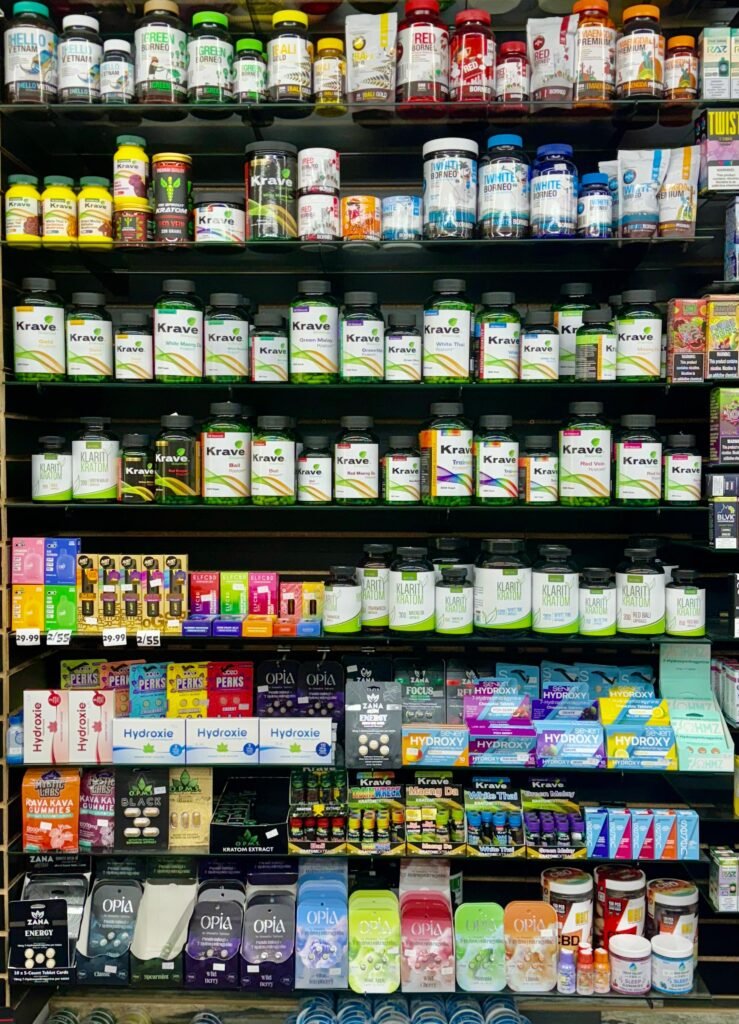
What We Carry
Prater Liquor and Smoke Shop carries kratom leaf powder and capsules for adults at our store on Prater Way in Sparks. Selection changes, so call (775) 622-0740 if you are looking for something specific. We do not give medical advice or make health claims about kratom, but we are happy to show you a product’s label and answer questions about what is on it.
Questions Worth Asking Any Kratom Seller
- Is this plain leaf powder or capsules, or an extract or enhanced product?
- Does the label list ingredients, directions, warnings and a batch number?
- Is there a lab report or certificate of analysis for this batch?
- Who makes it, and how can I contact them?
- How should it be stored, and is there an expiration date?
What Responsible Kratom Retail Looks Like
Whether you shop with us or somewhere else, a responsible kratom seller should make it easy for you to make an informed choice. In our view, that means:
- Checking age before every sale, without exception
- Stocking products that are sealed and clearly labeled with ingredients, directions and warnings
- Being upfront about what a product is, especially whether it is leaf or a concentrated extract
- Never claiming that kratom treats, cures or prevents any condition
- Keeping kratom away from candy, toys and anything marketed to children
- Staying current on the law and pulling products that become illegal
- Pointing customers to medical professionals and support resources when they ask health questions
If a seller cannot or will not do these things, that tells you something about how they treat their customers.
Our Commitments
- We sell kratom only to adults. Please bring a valid photo ID.
- We carry properly labeled powder and capsules.
- We do not make health claims or give medical advice.
- We follow Nevada law and will update our products and this page if the law changes.
While you are here, our store is also a full smoke shop in Sparks, with lighters and smoking accessories, a vape shop for Reno and Sparks customers and beer, wine and spirits, all in one stop.
Visiting Our Store on Prater Way
We are at 1447 Prater Way, Sparks, NV 89431, an easy drive from Downtown Sparks, Victorian Square, the McCarran Boulevard corridor, Spanish Springs, Sun Valley and Reno. Our current hours are listed on our Google Business Profile, and holiday hours can change, so call ahead if you are making a special trip. Tap Get Directions for turn-by-turn directions, or see our contact page for more ways to reach us.
If you are shopping for other things too, you might find our guides helpful: disposable vs refillable vapes, whiskey vs bourbon vs Scotch and our vape shop page.
A Short History of Kratom Regulation in the United States
Kratom has been sold in the United States for well over a decade, and its regulation has been contested from the start.
- Import alerts: the FDA has used import alerts since 2014 to detain certain kratom shipments at the border and has seized kratom products marketed with health claims.
- 2016 DEA proposal: the DEA announced its intent to temporarily place mitragynine and 7-OH in Schedule I. After strong public reaction and requests from members of Congress, the DEA withdrew the notice and opened a comment period instead.
- State-by-state approach: in the years that followed, states went in different directions. Some banned kratom outright. Others, including Nevada, adopted consumer-protection laws modeled on the Kratom Consumer Protection Act, focusing on age limits, labeling and adulteration rather than a ban.
- Rise of 7-OH products: from the mid-2020s, highly concentrated and chemically enhanced 7-OH products appeared in many stores, prompting a new wave of state and federal action focused on these products.
- 2026: Nevada’s Board of Pharmacy proposed scheduling kratom alkaloids, and federal agencies moved against concentrated and synthetic 7-OH-related compounds.
This history explains why the rules can feel confusing: different agencies and states have reached different conclusions, and the products on the market have changed significantly over time.
Why Kratom Is So Debated in Nevada
The April 2026 Board of Pharmacy workshop drew a wide range of public comment. Understanding both sides helps explain why the rules may keep changing.
Arguments Made for Keeping Kratom Legal and Regulated
- Some adults, including some veterans, have told regulators that they use kratom and prefer it remain legal under consumer-protection rules.
- Supporters argue that regulation, labeling and testing protect consumers better than a ban, which they say could push buyers toward unregulated sources.
- Some advocates draw a sharp line between natural leaf products and concentrated or synthetic 7-OH products, and support restrictions on the latter rather than the leaf itself.
Arguments Made for Tighter Restrictions
- Health professionals and some families have described dependence, serious harms and deaths they associate with kratom use.
- Regulators have expressed concern about potent 7-OH products and how widely they are sold.
- Critics point out that the FDA has not approved kratom for any use and that product quality and potency vary.
We are a retailer, not a regulator. Our approach is to follow the law as it stands, sell only properly labeled powder and capsules to adults and keep this page updated as the rules change.
Kratom vs Kava: Not the Same Thing
Customers sometimes confuse kratom with kava because both are botanical products sold in some of the same places. They are different plants with different histories and legal status.
| Kratom | Kava | |
|---|---|---|
| Plant | Mitragyna speciosa, a tree in the coffee family | Piper methysticum, a shrub in the pepper family |
| Traditional region | Southeast Asia | Pacific Islands |
| Traditional use | Leaves chewed or brewed as tea | Root prepared as a drink |
| Key compounds | Alkaloids such as mitragynine and 7-OH | Kavalactones |
| Regulatory focus | Age limits, labeling, 7-OH, proposed scheduling | Generally treated differently from kratom |
Kratom and Driving in Nevada
Nevada law prohibits driving while impaired, whatever the cause. Kratom can affect people differently, and combining it with alcohol or other substances increases the risk of impairment. Do not drive, operate machinery or do safety-sensitive work if you feel any effect from kratom or any other substance. Plan a ride or wait until you are fully clear.
Accidental Exposure: Children and Pets
Kratom products, especially capsules and flavored products, can be attractive to children and pets. Keep all kratom in its original container, sealed and stored out of reach, ideally locked away. If a child or pet swallows kratom, call Poison Control at 1-800-222-1222 right away, or your veterinarian or an animal poison hotline for pets. If someone has trouble breathing, has a seizure or will not wake up, call 911.
What to Do If Nevada’s Law Changes
If the Board of Pharmacy’s proposal or another change takes effect, kratom could become illegal to sell or possess in Nevada. If that happens:
- Stores, including ours, will stop selling any product that becomes illegal.
- Check official guidance from the Board of Pharmacy and local law enforcement about possession and disposal.
- Do not buy from unregulated online or street sources to get around the law. Products from those sources carry even greater quality and safety risks.
- If you have been using kratom regularly, talk to a doctor about stopping safely, because some people experience withdrawal symptoms.
- Check back here. We will update this page when the law changes.
A Note for Parents, Caregivers and Employers
If you are reading this because you are worried about someone else, you are not alone. Kratom is widely available, and many people do not realize it is age-restricted or that some products are much stronger than others.
- Parents: kratom cannot legally be sold to anyone under 18 in Nevada. If you believe a store is selling to minors, you can report it to local authorities.
- Talk openly: conversations about kratom go better when they are based on facts rather than fear. This page and official sources can help.
- Employers: if kratom use is a concern for safety-sensitive roles, set a clear written policy and apply it consistently.
- Get support: the SAMHSA National Helpline (1-800-662-4357) also helps family members find support and treatment options.
Reading Kratom News: Key Terms Explained
Headlines about kratom can be confusing because they often describe early steps in a process as if they were final. These terms help you tell the difference.
- Workshop: an early public meeting where a state board discusses a possible regulation and takes comments. A vote at a workshop usually means the board is moving forward, not that the rule is in effect.
- Proposed regulation: draft rule language, often published with a file number such as R105-26 in Nevada. It can still change or be withdrawn.
- Adoption hearing: a later public hearing where a board formally adopts a regulation.
- Legislative Commission review: in Nevada, many permanent regulations are reviewed by the Legislature’s Legislative Commission before they take effect.
- Notice of intent: at the federal level, the DEA’s announcement that it intends to schedule a substance. It is not the same as the substance being scheduled.
- Temporary scheduling order: a federal order that places a substance in a schedule temporarily, usually for up to two years, while permanent scheduling is considered.
- Effective date: the date a rule actually becomes enforceable. Always look for this date before assuming a change has happened.
Official Sources to Check
Laws and regulations change, so go to the source when you need to be sure.
- Nevada Revised Statutes (search for NRS 597.998) on the Nevada Legislature’s website
- Nevada State Board of Pharmacy for meeting agendas, workshops and proposed regulations
- U.S. Drug Enforcement Administration for federal scheduling announcements
- U.S. Food and Drug Administration for consumer warnings and recalls
- SAMHSA National Helpline for confidential treatment referrals and support
How We Keep This Page Accurate
Kratom law is changing quickly, so we review this page regularly and update it when Nevada or federal rules change. The legal summary on this page reflects public sources available as of November 2026, including the text of NRS 597.998, Nevada State Board of Pharmacy materials and published federal announcements. If you notice something out of date, let us know by calling (775) 622-0740 or through our contact page.
Kratom Glossary
- Mitragyna speciosa: the scientific name of the kratom tree.
- Alkaloids: naturally occurring compounds in plants. Kratom contains many.
- Mitragynine: the most abundant alkaloid in kratom leaf.
- 7-hydroxymitragynine (7-OH): a potent alkaloid found only in small amounts in natural leaf, and in higher amounts in enhanced products.
- Mitragynine pseudoindoxyl: a related compound included in recent federal and proposed Nevada scheduling actions.
- Extract: a concentrated product made by pulling alkaloids out of the leaf.
- COA (certificate of analysis): a lab report showing what a batch contains and whether it passed contaminant tests.
- GMP: good manufacturing practices, standards for making products consistently and safely.
- KCPA: Kratom Consumer Protection Act, a model law used by several states, including Nevada’s NRS 597.998.
- Schedule I: the most restrictive category of controlled substances under federal or state law.
Kratom in Nevada: A Short Timeline
| When | What happened |
|---|---|
| Before 2019 | Kratom sold in Nevada with no kratom-specific state rules |
| 2019 onward | Nevada regulates kratom under consumer-protection rules now found in NRS 597.998: no sales to minors, labeling and adulteration rules |
| 2025 | FDA recommends federal scheduling of 7-OH and warns sellers of concentrated 7-OH products |
| April 2026 | Nevada Board of Pharmacy votes at a workshop to move toward adding mitragynine, 7-OH and mitragynine pseudoindoxyl to Schedule I |
| July to August 2026 | DEA announces intent to temporarily schedule 7-OH above a threshold; three synthetic related compounds reported placed in Schedule I |
| November 2026 | Kratom remains legal for adults in Nevada while the state proposal is pending |
Kratom in Nevada: Frequently Asked Questions
Is kratom legal in Nevada?
As of November 2026, yes. Kratom is legal to sell to adults in Nevada under NRS 597.998, but the Nevada State Board of Pharmacy has proposed scheduling kratom alkaloids, which could change this.
How old do you have to be to buy kratom in Nevada?
Nevada law prohibits selling kratom to anyone under 18. Some retailers set a higher age, and many ask every customer for photo ID.
Is kratom legal in Reno and Sparks?
Reno and Sparks follow Nevada state law on kratom. We are not aware of a separate local ban, but laws change, so check before you buy.
Is Nevada banning kratom?
The Board of Pharmacy has proposed adding mitragynine, 7-OH and mitragynine pseudoindoxyl to Schedule I. If adopted and put into effect, that would effectively ban kratom in Nevada. As of our latest update it had not taken effect.
What is 7-OH?
7-hydroxymitragynine is a potent alkaloid found in very small amounts in natural kratom leaf. Some products are enhanced to contain much more, and those products have been the main focus of recent regulatory action.
Is kratom federally legal?
Natural kratom leaf has not been federally scheduled. The DEA has acted against certain synthetic 7-OH-related compounds and has moved to control concentrated 7-OH products.
Is kratom FDA approved?
No. The FDA has not approved kratom for any medical use and has warned consumers about its risks.
Do you sell kratom in Sparks?
Yes. Prater Liquor and Smoke Shop at 1447 Prater Way, Sparks, NV 89431 carries kratom powder and capsules for adults. Call (775) 622-0740 to check current selection.
Do you sell kratom extracts or 7-OH products?
Our kratom selection is powder and capsules. Ask in store if you have questions about a specific product.
Can I take kratom to another state?
Not always. Several states and some cities ban kratom, and others restrict 7-OH products. Check the laws where you are going before you travel.
Can I fly with kratom?
Kratom laws vary at your destination, and many countries control it. Check the laws of your destination and airline guidance before flying.
Is kratom safe?
Kratom is not risk free. Reported risks include dependence, withdrawal and serious adverse events, especially when combined with other substances. Talk to a doctor before using it.
Can I mix kratom with alcohol?
No. Combining kratom with alcohol, opioids, benzodiazepines or other sedatives increases the risk of serious harm.
Does kratom show up on a drug test?
Standard panels usually do not test for it, but specialized tests can detect kratom alkaloids.
What should be on a kratom label in Nevada?
Nevada law requires labels to clearly list ingredients and directions for safe and effective use. Look for warnings, a batch number and lab testing too.
Where can I get help with substance use?
Call the SAMHSA National Helpline at 1-800-662-4357, free and confidential, 24/7. In Nevada you can also dial 211.
Questions About Kratom? Talk to Us
We carry kratom powder and capsules for adults at Prater Liquor and Smoke Shop, 1447 Prater Way, Sparks, NV 89431. Call ahead to check selection, bring a valid photo ID and ask us to show you any product’s label. No health claims, no pressure, just straight answers.
